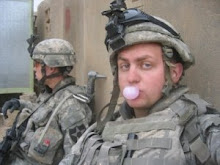
This November will mark the second time that I have been eligible to vote in a presidential election. I was barely nineteen years old when it came time to cast my ballot in 2004. Like any other teenager, I was clueless about the world of politics. I read only the front page of newspapers. I didn't know what a blog was, much less read them. It's safe to say that I was in the realm of the uninformed but not undecided; my parents were voting for George W. Bush. I shook his hand at a 5K in Dallas when he was still my governor. I figured that was good enough.
My vote wasn't cast in a school gym or a courthouse. I filled out my absentee ballot on the floor of my company area in the closing weeks of basic infantry training at Ft. Benning, Georgia. Though our superiors were to remain apolitical during the process and not recommend one candidate over another, it was our first foray into the belief that the military heavily favors conservatives. They told us how badly in shape Bill Clinton left the Army, and any liberal was sure to do it again. My drill sergeant, "Hurricane" Harris, told us the news of who won in an unusual way. He asked those who voted for Kerry to raise their hands. A few hands went up in an embarrassingly slow movement. "Well, he didn't win!" Hurricane proclaimed with a laugh. Most of us breathed a sigh of relief.
With an entire enlistment and a fifteen month tour in Iraq behind me, I'm a bit more in tune with politics and the candidates than I was four years ago. I consume news and information at an obsessive rate, but my attention is focused on veteran's issues and the wars in Iraq and Afghanistan. I don't care about Obama's smugness or McCain's ridiculous amount of houses. I don't give a shit about Michelle's lack of patriotism or Cindy getting high on her own supply of painkillers. In the end, it comes down to the treatment of veterans and what to do with those sticky territories where we still have American soldiers under fire.
I really want to like John McCain. He gets automatic points for being a fellow veteran and his well-known experience of a POW for 5 1/2 years. He should know the VA system like the back of his hand, I imagine. But by the belief that conservatives will always have the military in the tank, they can afford to burn us when it comes to pro-veteran and pro-military legislation. Even if some of us notice their betrayals, we still make up a tiny constituency. To them, we don't hold any sway. Otherwise they wouldn't treat us like scraggly dogs - smacking our nose after tossing us the table scraps.
There are plenty of minuses in the column of John McCain regarding these issues, but I'll cover the main reasons he has turned me away from his vote this year.
1. Opposition to the new GI Bill
This is the big one, the vote where veterans watched with bated breath to see if a new GI Bill would replace the outdated and underwhelming education benefits package. The outcome was literally going to change lives. With its passing, veterans could attend any school they want and have it paid for. If it was struck down, only a fraction of tuition costs would be covered. It came to no surprise that the bill was extraordinarily well received by politicians in an election year, but there were a few unsurprising holdouts. President Bush and his administration opposed it as being overly generous. My own senator, John Cornyn, opposed it for the same reason. When I called his office to learn why, his aide offered nothing more than it would encourage too many people to leave the service (that claim was later destroyed by the same report they cited). Cornyn stood by McCain as he offered his own watered down, toothless counter-bill, an insult to veterans who didn't luck out and land a slot in a military academy. It was a pathetic attempt to derail popular support for Webb's bill.
When the time to vote came, only two senators sat it out. One of them was Ted Kennedy, at home recovering from his brain surgery. The other was John McCain. He managed to miss the vote not once but twice, his maverick image tarnished by not taking a stand with a vote after publicly opposing the bill. Much to the chagrin of Bush and McCain, the GI Bill passed resoundingly. But what followed after that was even more outrageous. Forgetting about the newfangled internet, McCain went out took credit for the GI Bill, using the imaginary transferability issue to claim victory:
A lot of people put work into the bill. Politicians like Jim Webb and Chuck Hagel wrote and carried the bill under fire from Bush. Veteran's organizations like Vote Vets, IAVA, the VFW and American Legion helped to raise public awareness about the bill and lobby Washington. McCain, on the other hand, had a simple choice: to stand with fellow veterans and get the bill done, or side with the conservatives he hoped to woo in the election. Clearly, he went with the latter while taking the credit of the former.
2. The Elephant in Afghanistan
For the life of me, I can't recall John McCain having any sensible plan for Afghanistan, a place more dangerous per capita than Iraq and with a fraction of the troops. While the surge brigades crowded Baghdad, Afghanistan demanded attention that still has not been met. Obama has pledged at least two brigades to be sent there, a decision that would immediately ease the chaos on the porous border with Pakistan. McCain cannot make that same pledge; those brigades would be tied up in Iraq waiting for that ever so vague moment of victory. We're starting to see the price of not enough eyes on the objective when bombs start falling. Our resources are elsewhere, and that hinders American forces in Afghanistan that are trying to keep a lid on escalating violence.
3. Underwhelming Voting Record
I'll let the numbers speak for themselves here. IAVA scored legislative voting in 2006 after identifying what would benefit active duty servicemen and veterans. McCain gets a D, Obama a B+. It'll be interesting when they release the 2008 scores this fall. To read up on the methodology and to see a bunch of (R)s get Ds, download this document.
A little less damning is the Disabled American Veteran's group scoring, simply "with us" and "against us." John McCain scored 11 with us and 16 against us, with 5 not scored. And Obama? 17-1-1.
4. Plans for Leaving Iraq
This issue is almost baffling in its simplicity. Obama's plan to get out of Iraq is pretty similar to what the Iraqis want. McCain opposes this, insisting on a blank check approach. There is no telling if McCain would reverse any agreement made by the two governments on a definite date of departure.
Some might suggest that I should vote for McCain because he is a fellow veteran. These are the same people that suggested Kerry was a bad choice four years ago. Despite his many, many detractions, he still set foot in Vietnam when his opponent did not. Though Obama hasn't served, he has proven to have a positive impact when it comes to veterans. I admire McCain's past, but I cast much doubt on his vision of the future.
Monday, September 01, 2008


Sunday, August 24, 2008
The Last Patrol
It had to end, someday.
We had been at Combat Outpost Battle II for a few weeks, trying to leave it in the best shape possible for our beautiful, wonderful relief unit, our sister brigade from the other side of Ft. Lewis.
Operation Arrowhead Ripper was the cherry on top of a grueling five month adventure in Baqubah, a place we didn't know of in 2006 but one we'd get to know all-too well toward the end of 2007. After that big offensive, there was one last hurrah: the clearing and holding of the neighborhood of Old Baqubah.
It proved to be the most dangerous of neighborhoods, one left relatively untouched during the massive clearing operation in June and July. While elements from our brigade held ground on the west side of town, we began clearing operations in Old Baq' in the hopes of setting up a new outpost. For my twenty-second birthday, I read a book cover to cover inside a Stryker in between guard shifts. It was a gift from my platoon to not go on patrol.
We quickly found a suitable outpost, an abandoned two story whiskey distillery. To make enough room for a motor pool, we blew up a man's house that had been in his family for decades. For days, he came by our front door to collect the bricks, sprinkled over dozens of yards. He wanted to rebuild.
The days felt longer than any other point in the deployment. It had a lot to do with the heat; the building had no electricity and poor ventilation. The high ceilings gave way to several windows that let in plenty of sunlight. The concrete building and floor held the heat during the day and released it during the night. Most of us slept outside on the roof to escape the dreadful, choking air that filled the building. Half the time was spent stealing and re-stealing cots the Iraqi Army took upon themselves to grab when we were on patrol.
It was three days at the outpost, three days off. "Off" was a relative term. We spent that time on the FOB rearming and regrouping in between supply runs to the outpost. Time evaporated during our off periods, but came back with a vengeance back at COP Battle II.
Day in, day out. Going through the motions of scheduled patrols like the good ol' days of Mosul. It was all building to the inevitable. Our replacements were ready to show up near the end of August to effectively relieve our positions. Soon, we'd be going home.
By the luck of the draw, my squad was the last from my platoon to conduct a foot patrol during the day.

Right out the door, we came upon a group of sheep rummaging through one of the trash piles next to the outpost. One in particular was gnawing on a sheet of plastic. As we walked past, they momentarily stopped to watch us. The one with the plastic kept on gnawing.
Rounding around the block, we came upon a huge gathering in the street. Evidently there was a wedding going on, as throngs of people were singing, clapping and chanting down the street. We were bookended by kids riding bicycles and shouting slogans to us.

The most boring video of Iraq you'll find on the internets
Before heading out, we got the ubiquitous word that our BFFs, the 1920s, was possibly going to ambush us for old times sake. We were told to keep an eye on them, to not turn our backs to them even once.
We passed a couple of their checkpoints along the way, stopping to remind them to wear their reflective belts so they don't get shot in the face with a Hellfire missile. Walking in between us - a group of women under black head dresses, paying no heed to the American squad on either side of the street.


Matt gives Last Patrol 2: Insurgent Boogaloo two thumbs up!
You'd think that simple, vital things like smoke grenades would be in endless supply to the most senior unit in Iraq at the time. You'd be wrong. When our white screening smoke ran out, we were forced to use colored smoke (usually reserved for signaling). When our colored smoke ran out, we used training smoke grenades. The biggest concern wasn't that we were using smoke that barely lasted ten seconds, it was that we had training smoke in fucking combat. After the training smokes were gone, smoke grenades shot from grenade launchers were used. Imagine shielding yourself from machine gun fire with what amounts to fine colored chalk floating in the air. It'll definitely put some pep in your step.
On this patrol, we had managed to scrounge up enough smoke grenades. They were casually tossed to get rid of them, as they would be useless to us in ten minutes. Our platoon leader tried to play kick the can with an Iraqi kid, but he wasn't sure what to do with it.

Sure, NOW we get them...
The patrol didn't last longer than 45 minutes, but I had a tremendous sense of finality walking back to the outpost. As I looked around, I realized it would be the last time I'd have my feet down on hostile territory, the last time I peered habitually to rooftops and doorways, looking for anything out of the ordinary. It'd be the last time my sense of smell would be subdued by the intertwined smell of human waste and garbage (and the last time I'd have the privilege of stepping in both). But it was the first time I realized that our deployment was finite, that the end was drawing near toward an uncertain future of civilian life, with all its beautiful complexities we weren't afforded for fifteen months. We were going home.

AH
We had been at Combat Outpost Battle II for a few weeks, trying to leave it in the best shape possible for our beautiful, wonderful relief unit, our sister brigade from the other side of Ft. Lewis.
Operation Arrowhead Ripper was the cherry on top of a grueling five month adventure in Baqubah, a place we didn't know of in 2006 but one we'd get to know all-too well toward the end of 2007. After that big offensive, there was one last hurrah: the clearing and holding of the neighborhood of Old Baqubah.
It proved to be the most dangerous of neighborhoods, one left relatively untouched during the massive clearing operation in June and July. While elements from our brigade held ground on the west side of town, we began clearing operations in Old Baq' in the hopes of setting up a new outpost. For my twenty-second birthday, I read a book cover to cover inside a Stryker in between guard shifts. It was a gift from my platoon to not go on patrol.
We quickly found a suitable outpost, an abandoned two story whiskey distillery. To make enough room for a motor pool, we blew up a man's house that had been in his family for decades. For days, he came by our front door to collect the bricks, sprinkled over dozens of yards. He wanted to rebuild.
The days felt longer than any other point in the deployment. It had a lot to do with the heat; the building had no electricity and poor ventilation. The high ceilings gave way to several windows that let in plenty of sunlight. The concrete building and floor held the heat during the day and released it during the night. Most of us slept outside on the roof to escape the dreadful, choking air that filled the building. Half the time was spent stealing and re-stealing cots the Iraqi Army took upon themselves to grab when we were on patrol.
It was three days at the outpost, three days off. "Off" was a relative term. We spent that time on the FOB rearming and regrouping in between supply runs to the outpost. Time evaporated during our off periods, but came back with a vengeance back at COP Battle II.
Day in, day out. Going through the motions of scheduled patrols like the good ol' days of Mosul. It was all building to the inevitable. Our replacements were ready to show up near the end of August to effectively relieve our positions. Soon, we'd be going home.
By the luck of the draw, my squad was the last from my platoon to conduct a foot patrol during the day.
Right out the door, we came upon a group of sheep rummaging through one of the trash piles next to the outpost. One in particular was gnawing on a sheet of plastic. As we walked past, they momentarily stopped to watch us. The one with the plastic kept on gnawing.
Rounding around the block, we came upon a huge gathering in the street. Evidently there was a wedding going on, as throngs of people were singing, clapping and chanting down the street. We were bookended by kids riding bicycles and shouting slogans to us.
The most boring video of Iraq you'll find on the internets
Before heading out, we got the ubiquitous word that our BFFs, the 1920s, was possibly going to ambush us for old times sake. We were told to keep an eye on them, to not turn our backs to them even once.
We passed a couple of their checkpoints along the way, stopping to remind them to wear their reflective belts so they don't get shot in the face with a Hellfire missile. Walking in between us - a group of women under black head dresses, paying no heed to the American squad on either side of the street.
Matt gives Last Patrol 2: Insurgent Boogaloo two thumbs up!
You'd think that simple, vital things like smoke grenades would be in endless supply to the most senior unit in Iraq at the time. You'd be wrong. When our white screening smoke ran out, we were forced to use colored smoke (usually reserved for signaling). When our colored smoke ran out, we used training smoke grenades. The biggest concern wasn't that we were using smoke that barely lasted ten seconds, it was that we had training smoke in fucking combat. After the training smokes were gone, smoke grenades shot from grenade launchers were used. Imagine shielding yourself from machine gun fire with what amounts to fine colored chalk floating in the air. It'll definitely put some pep in your step.
On this patrol, we had managed to scrounge up enough smoke grenades. They were casually tossed to get rid of them, as they would be useless to us in ten minutes. Our platoon leader tried to play kick the can with an Iraqi kid, but he wasn't sure what to do with it.
Sure, NOW we get them...
The patrol didn't last longer than 45 minutes, but I had a tremendous sense of finality walking back to the outpost. As I looked around, I realized it would be the last time I'd have my feet down on hostile territory, the last time I peered habitually to rooftops and doorways, looking for anything out of the ordinary. It'd be the last time my sense of smell would be subdued by the intertwined smell of human waste and garbage (and the last time I'd have the privilege of stepping in both). But it was the first time I realized that our deployment was finite, that the end was drawing near toward an uncertain future of civilian life, with all its beautiful complexities we weren't afforded for fifteen months. We were going home.
AH
Sunday, July 27, 2008
Enemies With Benefits
Don't tell the pathetic non-serving members of the old media (and new media), but the surge wasn't wholly responsible for the drop in violence seen in Iraq over the last year. I have outlined the three main reasons violence has subsided, but one of the more important aspects is still largely misunderstood and mischaracterized by the punditry across the country.
The 'awakening group' movement first appeared in Anbar in late 2005 (or if you're John McCain, it started in a time warp before and after the surge) and has since grown to a large, lethal force that battles elements of al-Qaeda in Iraq and the Islamic State of Iraq. That is usually where the media narrative leaves you, insinuating that these groups are patriotic volunteers casting out the demons of al-Qaeda. What they don't mention is both the original motivations for these groups and their history of battling American soldiers. One of the latest to operate (and propped up by my unit in Diyala Province) is the 1920 Revolution Brigade. I covered their nationalist history a year ago, citing their name was a throwback to the 1920 revolution to oust British influence. So this group in particular didn't start in 2005, 2006 or even 2007, but in 2003 for one reason: to attack and kill Americans.
They got pretty good at it. While in Baghdad in late 2006 and early 2007, any group that we battled that wasn't Sadr's militia was likely the 1920s. Their most dramatic act?


Above is the crash site of a Blackwater Security helicopter, downed by the 1920s Brigade. My platoon responded to the crash, found the crew members executed and were caught up in a firefight started by anti-aircraft guns in high rise buildings.
The insurgent group met us head on in Baqubah, being present in the attack that killed my friend and an IED ambush that resulted in four explosions on three Strykers in just seconds. Yet somehow, it was deemed not only acceptable but advantageous to work with these killers. Two months later, we began our first patrols with them.
Without any remorse on our part, many of the 1920s (called "concerned local nationals" at this point) were killed accidentally by our hands at the start of that shaky alliance. American rifle and helicopter fire was the biggest 'concern' of these local nationals until they began wearing reflective belts and brown t-shirts. Some even brought up the notion of killing them once they outpaced their usefulness. Our battalion surgeon, a well respected medical doctor in the civilian world, had the best idea: "kick the Stryker up to sixty and throw them out the open door."

Insurgent "Concerned local national" checkpoint stops a deadly kid on a bike as an old man looks on
Unfortunately, we couldn't take out the trash that easily. We grudingly worked with the 1920s as per our orders. We were moderately successful in tracking down al-Qaeda operatives (or possibly doing in-house cleaning) and caches. But the point isn't the success of turning over a new leaf with insurgents, though. We traded in our values, our self reliance to get things done, for $300 a head. We did not destroy our enemy but rather aided them. We secured not only their future success, but the future instability with the Iraqi government. Maliki and his Shia government adamantly oppose the Sunni groups and have said in the past that they will never become a permanent part of Iraqi forces.
But they don't pay the former insurgents, we do, as taxpayers. That's why they're trying to leverage the American military into giving them more money, the ol' "pay me more or I'm going back to killing you" ruse. And for their part, they'll probably be successful. Commanders know that they're important not for killing al-Qaeda, but for not fighting us. They're not allies, they're enemies with benefits. And they're holding the cards.
Why isn't there an outcry from the media and citizenry about these people? Quite simply, the military led the media by its nose when they characterized insurgents as "concerned" and proudly spoke of them as volunteers. To further confuse people, they were renamed 'Baqubah Guardians' and then finally 'Sons of Iraq,' each name a brighter shade of lipstick for the same dirty pig. They're only growing stronger and more experienced as time goes on, watching coalition forces close up, looking for every weakness. They've already discovered a big one: our over-reliance on their dirty, sectarian work.

A 1920s member who likely lifted a bullet-proof vest off a dead Iraqi policeman
You can only pay someone not to fight you for so long before they ask for more and more. We're past that point now, and approaching another tough reality on the horizon. If we're as successful as defeating al-Qaeda as the media says we are, who will our new friends fight, if not us?

The very definition of 'a friendship of convenience'
AH
The 'awakening group' movement first appeared in Anbar in late 2005 (or if you're John McCain, it started in a time warp before and after the surge) and has since grown to a large, lethal force that battles elements of al-Qaeda in Iraq and the Islamic State of Iraq. That is usually where the media narrative leaves you, insinuating that these groups are patriotic volunteers casting out the demons of al-Qaeda. What they don't mention is both the original motivations for these groups and their history of battling American soldiers. One of the latest to operate (and propped up by my unit in Diyala Province) is the 1920 Revolution Brigade. I covered their nationalist history a year ago, citing their name was a throwback to the 1920 revolution to oust British influence. So this group in particular didn't start in 2005, 2006 or even 2007, but in 2003 for one reason: to attack and kill Americans.
They got pretty good at it. While in Baghdad in late 2006 and early 2007, any group that we battled that wasn't Sadr's militia was likely the 1920s. Their most dramatic act?
Above is the crash site of a Blackwater Security helicopter, downed by the 1920s Brigade. My platoon responded to the crash, found the crew members executed and were caught up in a firefight started by anti-aircraft guns in high rise buildings.
The insurgent group met us head on in Baqubah, being present in the attack that killed my friend and an IED ambush that resulted in four explosions on three Strykers in just seconds. Yet somehow, it was deemed not only acceptable but advantageous to work with these killers. Two months later, we began our first patrols with them.
Without any remorse on our part, many of the 1920s (called "concerned local nationals" at this point) were killed accidentally by our hands at the start of that shaky alliance. American rifle and helicopter fire was the biggest 'concern' of these local nationals until they began wearing reflective belts and brown t-shirts. Some even brought up the notion of killing them once they outpaced their usefulness. Our battalion surgeon, a well respected medical doctor in the civilian world, had the best idea: "kick the Stryker up to sixty and throw them out the open door."
Unfortunately, we couldn't take out the trash that easily. We grudingly worked with the 1920s as per our orders. We were moderately successful in tracking down al-Qaeda operatives (or possibly doing in-house cleaning) and caches. But the point isn't the success of turning over a new leaf with insurgents, though. We traded in our values, our self reliance to get things done, for $300 a head. We did not destroy our enemy but rather aided them. We secured not only their future success, but the future instability with the Iraqi government. Maliki and his Shia government adamantly oppose the Sunni groups and have said in the past that they will never become a permanent part of Iraqi forces.
But they don't pay the former insurgents, we do, as taxpayers. That's why they're trying to leverage the American military into giving them more money, the ol' "pay me more or I'm going back to killing you" ruse. And for their part, they'll probably be successful. Commanders know that they're important not for killing al-Qaeda, but for not fighting us. They're not allies, they're enemies with benefits. And they're holding the cards.
Why isn't there an outcry from the media and citizenry about these people? Quite simply, the military led the media by its nose when they characterized insurgents as "concerned" and proudly spoke of them as volunteers. To further confuse people, they were renamed 'Baqubah Guardians' and then finally 'Sons of Iraq,' each name a brighter shade of lipstick for the same dirty pig. They're only growing stronger and more experienced as time goes on, watching coalition forces close up, looking for every weakness. They've already discovered a big one: our over-reliance on their dirty, sectarian work.
A 1920s member who likely lifted a bullet-proof vest off a dead Iraqi policeman
You can only pay someone not to fight you for so long before they ask for more and more. We're past that point now, and approaching another tough reality on the horizon. If we're as successful as defeating al-Qaeda as the media says we are, who will our new friends fight, if not us?
The very definition of 'a friendship of convenience'
AH
Monday, July 14, 2008
From Nation Building To Net Roots
It's a strange concept to me, being home ten months, yet I left for Iraq more than two years ago. To put that into perspective, I got on that big, beautiful plane as a clueless twenty year old. This week, I'll be turning 23.
These days, I have a less deadly (and therefore less exciting) job in a warehouse. A regular 9-5 until I wait for school to start. I was always a quiet guy, never really the kind to strike up a conversation with someone I didn't know well. Introverted as all get out.
Lately, I feel that personality trait rearing its head again. I thought it was gone; anyone from my platoon can tell you that I absolutely loved to debate anyone and anything with my partner in crime, Steve. We were an arguing force to be reckoned with, and I always carried a big voice when we discussed everything from capital punishment to evolution.
Now in the break room, civilian as hell, I can barely muster a hello or keep a conversation going. It's not shyness, it's a breakdown of understanding the culture I left and readjusting to it. While deployed, we knew society moved on without us. What we didn't realize is that it would keep going even after we got home, still without us.
The two dueling wars, fought by neighbor's cousins and friends from high school, have little to do with day to day life. When I tell someone where I was the past two years, they usually respond with "oh." They're either too embarrassed to ask about it or too bored at the prospect. Questions begin and end with, really, what was it like? I often give two descriptions: hot and shitty. There's no point in telling the truth, that for better and for worse, my time there changed me. There's no point in describing the feeling I get walking down the street in my run down neighborhood, a sinking uneasiness when I imagine the passing cars could explode. The same exact feeling when you hear a bullet whiz by you for the first time, coming close enough to ring your ears. No, I just tell them how stepping in human shit can really damper an afternoon stroll in Baghdad.

L to R: A rare picture of Chi's face, Dude, Jesse and Payday on our maiden voyage
Two years ago this week. I'm getting old.
My antics here and at Vet Voice got me a spot at the milblogging panel at Net Roots Nation this week. I don't know what I'll be discussing, but let's see if I can get over that whole 'not talking' thing. If you're attending, let me know and I'll tell you how to get around Austin (hint: don't get on I-35).
AH
These days, I have a less deadly (and therefore less exciting) job in a warehouse. A regular 9-5 until I wait for school to start. I was always a quiet guy, never really the kind to strike up a conversation with someone I didn't know well. Introverted as all get out.
Lately, I feel that personality trait rearing its head again. I thought it was gone; anyone from my platoon can tell you that I absolutely loved to debate anyone and anything with my partner in crime, Steve. We were an arguing force to be reckoned with, and I always carried a big voice when we discussed everything from capital punishment to evolution.
Now in the break room, civilian as hell, I can barely muster a hello or keep a conversation going. It's not shyness, it's a breakdown of understanding the culture I left and readjusting to it. While deployed, we knew society moved on without us. What we didn't realize is that it would keep going even after we got home, still without us.
The two dueling wars, fought by neighbor's cousins and friends from high school, have little to do with day to day life. When I tell someone where I was the past two years, they usually respond with "oh." They're either too embarrassed to ask about it or too bored at the prospect. Questions begin and end with, really, what was it like? I often give two descriptions: hot and shitty. There's no point in telling the truth, that for better and for worse, my time there changed me. There's no point in describing the feeling I get walking down the street in my run down neighborhood, a sinking uneasiness when I imagine the passing cars could explode. The same exact feeling when you hear a bullet whiz by you for the first time, coming close enough to ring your ears. No, I just tell them how stepping in human shit can really damper an afternoon stroll in Baghdad.
L to R: A rare picture of Chi's face, Dude, Jesse and Payday on our maiden voyage
Two years ago this week. I'm getting old.
My antics here and at Vet Voice got me a spot at the milblogging panel at Net Roots Nation this week. I don't know what I'll be discussing, but let's see if I can get over that whole 'not talking' thing. If you're attending, let me know and I'll tell you how to get around Austin (hint: don't get on I-35).
AH
Sunday, June 22, 2008
Final Salute
I just finished a book called "Final Salute: A Story of Unfinished Lives," a book by Pulitzer Prize winner Jim Sheeler. It centers around a Marine casualty assistance officer and the stories of the families most affected by the war. It'd behoove the nation to read it. I wrote a little something about it on VetVoice. Please do take a look!
AH
AH
Monday, June 16, 2008
Photo Story Monday - Burning Sensations
I was kind of lucky going on leave when I did. We arrived in Diyala Province just ten days before my scheduled day to go. My friend Steve and I decided to go to Europe together, and we were the very last in the platoon for a much needed break. Everybody knew it, too, and if you were ever in the military, you know that anything that could be made of, will be made fun of. My leave date was no different.
"Hey dude, when you going on leave, two weeks before we go home?" Some would ask.
"It must suuuuck not to go on leave yet," said others, regaling me with stories of their two weeks at home that came months prior.
I gave them all a quick fuck you and playfully told them I wished they would have twice the work to do while I was gone. Sadly, that came true.
In the near month I was gone, my company saw some of the most intense fighting of our deployment. Firefights became more routine than patrols, and for the first 45 days of operations in Baqubah, 40 of them were spent outside the wire, sleeping in abandoned Iraqi houses as the summer slowly crept on.
By the time I got back, my former team leader was killed and my squad leader was shot in the arm by a sniper. I had missed a lot, but was a bit anxious to be back in the mix. There was no point in looking forward to home. When I left for Europe, it was only two months away. When I came back, it was five.
I wasn't placed gently back into missions but thrown violently into a new phase of our deployment. Before my departure, it was standard operating procedure to call EOD (explosive ordnance disposal) any time we found a cache or an IED. We didn't find many in Baghdad, but they kept popping up in Baqubah. Imagine a road where every few yards, a bomb buried deep in the ground was waiting for you like a starving predator waiting for the next meal.
It was too much for the EOD guys to handle, bless 'em. They were overloaded, and that meant that blowin' up stuff was going to be a new addition to our endless list of side jobs.
I was stunned the first time Matt uncovered an IED wire, picked it up and followed it to a HUGE FUCKING BOMB in the middle of the road. It eviscerated every rule I knew about IEDs, which all amounted to 'don't go near them.' It was all too routine for Matt and others in my company to simply find the bomb, mark it and wait for EOD to come.

You just follow that wire. I'll be back here

The culprit: Underneath our metal can marker
We left some guys to watch it and continued on our patrol. We got word later that EOD had placed charges on it, so it would be in our best interest to take cover.
On our way back to COP Battle I, we passed by the crater the blast had left. We had to run by it, actually. To our left was a huge open field with scattered palm trees - a perfect hideout for snipers. Everyone was running in pairs past the hole, except Bill. Bill wanted me to take his picture inside of it. Matt decided to join him. I accepted the invitation to take the picture as my fellow platoon mates sprinted ahead of me.

It took me awhile to wrap my head around that. Before, we didn't go near IEDs. Now we were walking directly to them to give it a once-over. Let the EOD team know, hey, you got some land mines taped to a can of gasoline. Good luck.
Pretty soon after that, we were finding so much bullshit that we could take things a step beyond and blow stuff ourselves. A couple of guys carried C4, detonation cord and all the other goodies necessary for homemade boom.
Dozer was always finding caches, like it was a sixth sense. In one particular courtyard, he uncovered a buried water tank filled with RPGs, launchers and machine gun ammo. In other words, a lot of shit.

If you spend enough time on the ground in Iraq, you're bound to come across a screaming, hysterical woman that will cry and yell right in your face before she slaps herself over and over. It's one of those things that transcend culture and human dignity; women striking themselves in fits of rage.
I caught one of those moments from across the street. I was standing in the courtyard with a bunch o' weapons while the people in the houses near us were told to leave while we destroyed the cache, for their safety.

Obviously, the lady in the blue wasn't going to go quietly, but we managed to get her family to take her away to a neighbor's house.
The guy who laid the charges on the cache let us know it was going to be, for the lack of a better term, a big one. We moved several blocks, took off our helmets, and waited.
One minute.
Thirty seconds.
Burning.
For the truly impatient, go to 1:00
The explosion threw so much shit into the air that I heard chunks of concrete falling near us, several blocks away. The house that contained the cache was completely destroyed, as was the house next to it.

Winning hearts and minds
The force of the blast was great enough to destroy the courtyard gate across the street and start a small fire on the roof.

The oozing septic pond next to the house was thrown all over the neighborhood as bricks from the house are strewn about
I learned quite a bit in my first week back in the game. It was okay to approach a massive IED like an injured bunny and place other bombs on top of them. It was okay to tug on its wires and hack at it with a crowbar to get a better look. It was at one time profane, but eventually it became nothing more than ordinary.
AH
"Hey dude, when you going on leave, two weeks before we go home?" Some would ask.
"It must suuuuck not to go on leave yet," said others, regaling me with stories of their two weeks at home that came months prior.
I gave them all a quick fuck you and playfully told them I wished they would have twice the work to do while I was gone. Sadly, that came true.
In the near month I was gone, my company saw some of the most intense fighting of our deployment. Firefights became more routine than patrols, and for the first 45 days of operations in Baqubah, 40 of them were spent outside the wire, sleeping in abandoned Iraqi houses as the summer slowly crept on.
By the time I got back, my former team leader was killed and my squad leader was shot in the arm by a sniper. I had missed a lot, but was a bit anxious to be back in the mix. There was no point in looking forward to home. When I left for Europe, it was only two months away. When I came back, it was five.
I wasn't placed gently back into missions but thrown violently into a new phase of our deployment. Before my departure, it was standard operating procedure to call EOD (explosive ordnance disposal) any time we found a cache or an IED. We didn't find many in Baghdad, but they kept popping up in Baqubah. Imagine a road where every few yards, a bomb buried deep in the ground was waiting for you like a starving predator waiting for the next meal.
It was too much for the EOD guys to handle, bless 'em. They were overloaded, and that meant that blowin' up stuff was going to be a new addition to our endless list of side jobs.
I was stunned the first time Matt uncovered an IED wire, picked it up and followed it to a HUGE FUCKING BOMB in the middle of the road. It eviscerated every rule I knew about IEDs, which all amounted to 'don't go near them.' It was all too routine for Matt and others in my company to simply find the bomb, mark it and wait for EOD to come.
You just follow that wire. I'll be back here
The culprit: Underneath our metal can marker
We left some guys to watch it and continued on our patrol. We got word later that EOD had placed charges on it, so it would be in our best interest to take cover.
On our way back to COP Battle I, we passed by the crater the blast had left. We had to run by it, actually. To our left was a huge open field with scattered palm trees - a perfect hideout for snipers. Everyone was running in pairs past the hole, except Bill. Bill wanted me to take his picture inside of it. Matt decided to join him. I accepted the invitation to take the picture as my fellow platoon mates sprinted ahead of me.
It took me awhile to wrap my head around that. Before, we didn't go near IEDs. Now we were walking directly to them to give it a once-over. Let the EOD team know, hey, you got some land mines taped to a can of gasoline. Good luck.
Pretty soon after that, we were finding so much bullshit that we could take things a step beyond and blow stuff ourselves. A couple of guys carried C4, detonation cord and all the other goodies necessary for homemade boom.
Dozer was always finding caches, like it was a sixth sense. In one particular courtyard, he uncovered a buried water tank filled with RPGs, launchers and machine gun ammo. In other words, a lot of shit.
If you spend enough time on the ground in Iraq, you're bound to come across a screaming, hysterical woman that will cry and yell right in your face before she slaps herself over and over. It's one of those things that transcend culture and human dignity; women striking themselves in fits of rage.
I caught one of those moments from across the street. I was standing in the courtyard with a bunch o' weapons while the people in the houses near us were told to leave while we destroyed the cache, for their safety.
Obviously, the lady in the blue wasn't going to go quietly, but we managed to get her family to take her away to a neighbor's house.
The guy who laid the charges on the cache let us know it was going to be, for the lack of a better term, a big one. We moved several blocks, took off our helmets, and waited.
One minute.
Thirty seconds.
Burning.
For the truly impatient, go to 1:00
The explosion threw so much shit into the air that I heard chunks of concrete falling near us, several blocks away. The house that contained the cache was completely destroyed, as was the house next to it.
Winning hearts and minds
The force of the blast was great enough to destroy the courtyard gate across the street and start a small fire on the roof.
The oozing septic pond next to the house was thrown all over the neighborhood as bricks from the house are strewn about
I learned quite a bit in my first week back in the game. It was okay to approach a massive IED like an injured bunny and place other bombs on top of them. It was okay to tug on its wires and hack at it with a crowbar to get a better look. It was at one time profane, but eventually it became nothing more than ordinary.
AH
Monday, May 26, 2008
Photo Story Monday - Recollections
On a radio interview I did for Memorial Day, I had a hard time describing how I would spend it this year. Before I enlisted, Memorial Day seemed a convenient way to have a long weekend away from school. In my first year in the Army, it was spent sleeping in without having to do any PT. No push ups in the mushy Ft. Lewis grass for us that day.
A year ago, Memorial Day was spent in the confines of our small outpost on the east side of Baqubah. We had converted a two story house into a fortress deep within the city to keep close to the roads and buildings that concealed homemade bombs, waiting for us to wander helplessly into them. It was part of the surge strategy: total immersion in the communities we patrolled.

1/2 of Team Destructon talking to Omar

I don't know why I'm being dressed in the background
The outpost was a home away from home, one where we spent four days out of seven without plumbing, running water or relative safety. All that was found miles away at a huge forward base. We were on our own, two platoon's worth of scrawny, hungry, tired and irritable men heading into month twelve of the deployment. On the day we were supposed to be home, everyone gathered on cots on the second floor, shouting phrases like "fifth quarter, fuck yeah!" and "Overtime baby!". We were, as you can imagine, a little disappointed in June of 2007. We were supposed to be on American soil by then, sipping beers and laughing about the deployment and how cold Washington was. Instead we were chugging boiling water in between guard shifts and slapping mosquitoes off our necks in the Diyala River Valley.
We named the place COP (Combat Outpost) Battle, after our company motto of Battle Hard. It was here where routine almost started happening again, a schedule of patrols and raids that weren't too hard to follow. As I've tried to explain before, war is a time spent largely on your ass or on your feet, waiting for some guy in some office to tell some other guy what to do. COP Battle wasn't so much of a base as it was a lounge for second platoon. Sure, it didn't have furniture and we burned our own trash outside, but it was all we had for a couple months. A place you dreaded going to, but when you got there, you figured it was alright.

OK Kyle, here's a picture of you without a shirt. Can I have my $10 now?

Not too many places to cut hair in an abandoned city

Whoopsies
How do I spend Memorial Day? Like any other. If the occasion is about somber reflection of the valorous dead, killed in battle, then every day is Memorial Day to me, and I imagine, to my friends. I cannot get through a day without thinking of Chevy or Jesse, without their images running through my head over and over, thinking about how they gave their lives in the most selfless way imaginable so that we may live through the war and carry their spirit home with us. It was easy at first to separate my time in Iraq from the present, here in civilian life in the states. Now it has become a constant battle not to be drawn back into that past, that reality left behind.
It's bafflingly difficult to explain the feeling of wanting to go back, but when you think of those times, like at COP Battle, it doesn't feel out of place. I remember watching bootleg DVDs of The O.C. in between patrols. In passing, people would ask "Is that the fucking O.C.?" in a disapproving voice, only to join in and become entranced. I remember the Iraqi Army stealing flip-flops and CD players from us, almost resulting in cross-culture fist fights. I remember standing on the roof in shorts and a t-shirt, trying to get cell phone reception on the shitty Iraqi service long enough to call Lauren. I remember the funniest thing I have ever seen in my life: a truckload of water and rations falling off a flatbed truck in an attempt to smoothly place it on the ground (see above for the aftermath).
Most of all, I remember the jokes and laughs heard throughout COP Battle, where the worst times of our life turned out to be pretty good. Where memories of Chevy and Jesse carried on every single day after their deaths, their sacrifices heavy in our hearts and in our minds. Memorial Day isn't so much about remembering the dead as it is remembering why they died for us, their brothers. It was to get us closer to home, if only by a few seconds, so that we may live.
How do I spend Memorial Day? By carrying on, like Chevy and Jesse wanted us to.
AH
A year ago, Memorial Day was spent in the confines of our small outpost on the east side of Baqubah. We had converted a two story house into a fortress deep within the city to keep close to the roads and buildings that concealed homemade bombs, waiting for us to wander helplessly into them. It was part of the surge strategy: total immersion in the communities we patrolled.
1/2 of Team Destructon talking to Omar
I don't know why I'm being dressed in the background
The outpost was a home away from home, one where we spent four days out of seven without plumbing, running water or relative safety. All that was found miles away at a huge forward base. We were on our own, two platoon's worth of scrawny, hungry, tired and irritable men heading into month twelve of the deployment. On the day we were supposed to be home, everyone gathered on cots on the second floor, shouting phrases like "fifth quarter, fuck yeah!" and "Overtime baby!". We were, as you can imagine, a little disappointed in June of 2007. We were supposed to be on American soil by then, sipping beers and laughing about the deployment and how cold Washington was. Instead we were chugging boiling water in between guard shifts and slapping mosquitoes off our necks in the Diyala River Valley.
We named the place COP (Combat Outpost) Battle, after our company motto of Battle Hard. It was here where routine almost started happening again, a schedule of patrols and raids that weren't too hard to follow. As I've tried to explain before, war is a time spent largely on your ass or on your feet, waiting for some guy in some office to tell some other guy what to do. COP Battle wasn't so much of a base as it was a lounge for second platoon. Sure, it didn't have furniture and we burned our own trash outside, but it was all we had for a couple months. A place you dreaded going to, but when you got there, you figured it was alright.
OK Kyle, here's a picture of you without a shirt. Can I have my $10 now?
Not too many places to cut hair in an abandoned city
Whoopsies
How do I spend Memorial Day? Like any other. If the occasion is about somber reflection of the valorous dead, killed in battle, then every day is Memorial Day to me, and I imagine, to my friends. I cannot get through a day without thinking of Chevy or Jesse, without their images running through my head over and over, thinking about how they gave their lives in the most selfless way imaginable so that we may live through the war and carry their spirit home with us. It was easy at first to separate my time in Iraq from the present, here in civilian life in the states. Now it has become a constant battle not to be drawn back into that past, that reality left behind.
It's bafflingly difficult to explain the feeling of wanting to go back, but when you think of those times, like at COP Battle, it doesn't feel out of place. I remember watching bootleg DVDs of The O.C. in between patrols. In passing, people would ask "Is that the fucking O.C.?" in a disapproving voice, only to join in and become entranced. I remember the Iraqi Army stealing flip-flops and CD players from us, almost resulting in cross-culture fist fights. I remember standing on the roof in shorts and a t-shirt, trying to get cell phone reception on the shitty Iraqi service long enough to call Lauren. I remember the funniest thing I have ever seen in my life: a truckload of water and rations falling off a flatbed truck in an attempt to smoothly place it on the ground (see above for the aftermath).
Most of all, I remember the jokes and laughs heard throughout COP Battle, where the worst times of our life turned out to be pretty good. Where memories of Chevy and Jesse carried on every single day after their deaths, their sacrifices heavy in our hearts and in our minds. Memorial Day isn't so much about remembering the dead as it is remembering why they died for us, their brothers. It was to get us closer to home, if only by a few seconds, so that we may live.
How do I spend Memorial Day? By carrying on, like Chevy and Jesse wanted us to.
AH
Tuesday, May 20, 2008
New Ad Campaign From Vote Vets
Today, VoteVets.org released a double barrel ad campaign on a subject near and dear to me, reformed education benefits for veterans of Iraq and Afghanistan. The two adds plead with two key Republicans to sign onto Senator Webb's GI Bill, Senator Cornyn from Texas (my senator), and Senator McCain.
Senator Cornyn
Senator McCain
This really should have not been a political issue, but allegiances to parties before soldiers and veterans forced it to be.
AH
Senator Cornyn
Senator McCain
This really should have not been a political issue, but allegiances to parties before soldiers and veterans forced it to be.
AH
Friday, May 16, 2008
Truth or Consequences - The Quest for a New G.I. Bill
When I heard about the new G.I. Bill some time ago, I thought it was too good to be true. With the pitiful peacetime, 80s era education benefits being offered to veterans today, it seemed a far cry to see those benefits improve drastically to assist those who, you know, did the heavy lifting for this country for the past seven years and counting. I've been following this development for some time now, writing this piece for Vet Voice and later this little thing.
The good news is the revamped G.I. Bill cleared the House by an overwhelming vote of 256-166. Here's a handy list of who voted for and against it, so when supporting America's troops is quantified, you can see who gave a big, sleazy meh.
The good news doesn't stop there! McCain-Graham's cowardly, toothless version of the G.I. Bill was struck down with great vengeance and furious anger as it tried to sneak in before the Memorial Day break.
But you might ask me, "Alex, what's the difference between all these bills? Can't we just have the best one?" Well, here's a comparison of the current G.I. Bill, McCain-Graham's version and Webb's version.
Current G.I. Bill
$1,200 nonrefundable contribution from the first year of a soldier's paycheck
Maximum benefits of $1,100 per month for a total of $39,600 (Reservists and National Guardsmen get a fraction of that)
A time frame of ten years to use the benefits
McCain-Graham's G.I. Bill (S. 2938 - The Enhancement of Recruitment, Retention, and Readjustment Through Education Act)
Twelve years of service for maximum benefits of $2,000 a month, six years yields $1,500. This figure is fixed and does not address rising tuition
Touted transferability to veteran's family members (this has been a feature of the G.I. Bill since 2002)
Around fifteen Senate cosponsors (just conservatives)
Webb's G.I. Bill (S. 22 - the Post-9/11 Veterans Educational Assistance Act)
Complete tuition costs after three years of service, with benefits maxed out at the most expensive public school in the veteran's state. Costs will cover a private school if a compromise is met with the school and student
A monthly living stipend equal to a married E-5 living in the area (that's BAH for you veterans)
Books and other costs are completely taken care of
58 Senate cosponsors and strong bipartisan support
Does it come to any surprise the Pentagon and Bush administration adamantly oppose Webb's proposal, which is clearly the best? Here's their take from a press conference a couple of weeks ago:
You know, we are mostly concerned with the harm it would do to troop retention. We have no issue with the fact that Senator Webb wishes to, you know, provide a more generous education benefit to troops, but we are certainly concerned that this would be eligible to them after only two years of service.
We think pegging it to a longer period of service -- the number we have in mind at this point is six years of service -- that the longer you stay in, the sweeter the benefits are to you. Six years would show a commitment to service. In fact, it would allow for at least, at that point, one reenlistment for another tour of duty. And having done that, we believe that they should certainly have the ability to transfer their unused education benefits to their spouse or to their children, and that we believe to be very family friendly and would also enhance retention among our troops. The last thing we want to do is provide a benefit -- or last thing we want to do is create a situation in which we are losing our men and women who we have worked so hard to train.
Translation: Three years (minimum enlistment time) doesn't cut it for sacrifice and commitment anymore, only a reenlistment at the very least.
It is definitely not the Pentagon's job to define commitment to service in terms of years. One infantryman could deploy twice in three years and get separated for PTSD (or their new favorite, adjustment disorder), and a desk jockey could never deploy in six. According to those tucked safely away in the Pentagon, the guy riding the desk deserves more benefits than the grunt with a messed up head. A sliding scale of education payments is a disgrace and insult, attempting to hold hostage as many people as possible until they reach the finish line of 6-12 years.
There's an obvious philosophical difference between Webb's bill and McCain-Graham's bill. Webb's bill recognizes service after 9/11 as an honorable commitment because it meant volunteering in a time of war. Just that act garners recognition and education benefits that every service member is entitled to. It's aware that almost three quarters of enlisted personnel separate after their first enlistment, so increasing benefits will not do much to hinder the size of our forces. It also recognizes that education is a direct cost of war, just like beans, bullets and bombers. It's vital for reintegrating back into a society that the soldier risked their life for.
McCain-Graham's bill is a bit different. It pushes aside the fact that most people want to get out after their first enlistment is up. It aims to recreate separate-but equal standards by awarding those who stay in the service and punishing those who get out. It has a fixed level of monthly payments that does nothing to address rising tuition, whereas Webb's version is dynamically set to change as tuition inevitably goes up. It completely ignores how compelling Webb's bill would be in terms for first time enlistees. In the internet age, any would-be recruit can easily look at the current G.I. Bill to see how inadequate it is. Or I can do it for you. For those interested in getting college money by joining the military, you won't be getting much. Sorry to break it to you. But if Webb's G.I. Bill passes, you won't have to worry about deciding between food or school once you get out of the military. Education benefits is the number one reason people enlist in the military. Only a fraction go on to multiple enlistments, so the military isn't losing anyone they wouldn't lose anyway. Those scare tactics about rising benefits dealing a blow to retention are completely without merit, and I'm not the only one who thinks so.
This will all come to a head next week when the bill goes onto the Senate floor. In the meantime, go here to see if your senators are on board. If not, call or email them and ask why they're against giving our veterans what they need.
I've written my own form letter you can copy and send to your own senator*.
Senator ______________,
Dude, it has come to my attention that you are not currently a cosponsor for S. 22, the Post-9/11 Veterans Educational Assistance Act. To which I ask a succinct question: what the hell? Veterans of the war of Iraq and Afghanistan, if only a small number of your constituents, deserve your attention and approval of this vital bill for education assistance. Luckily, only a small number of you were tricked by the introduction of S. 2938, Senator Graham's pathetic shadow of S. 22. Congratulations for knowing the difference between a bill and an insult! But we need more from you. Please, pretty please, at least two of you add your names and realize what it means to really support the troops. Tomorrow's doctors, lawyers, firefighters and lobbyists are waiting for their education to be secured. I know you can't deal without any of those groups! Thank you for your time.
Respectfully,
______________
AH
*Please don't send this to any public official. They deserve respect!
The good news is the revamped G.I. Bill cleared the House by an overwhelming vote of 256-166. Here's a handy list of who voted for and against it, so when supporting America's troops is quantified, you can see who gave a big, sleazy meh.
The good news doesn't stop there! McCain-Graham's cowardly, toothless version of the G.I. Bill was struck down with great vengeance and furious anger as it tried to sneak in before the Memorial Day break.
But you might ask me, "Alex, what's the difference between all these bills? Can't we just have the best one?" Well, here's a comparison of the current G.I. Bill, McCain-Graham's version and Webb's version.
Current G.I. Bill
$1,200 nonrefundable contribution from the first year of a soldier's paycheck
Maximum benefits of $1,100 per month for a total of $39,600 (Reservists and National Guardsmen get a fraction of that)
A time frame of ten years to use the benefits
McCain-Graham's G.I. Bill (S. 2938 - The Enhancement of Recruitment, Retention, and Readjustment Through Education Act)
Twelve years of service for maximum benefits of $2,000 a month, six years yields $1,500. This figure is fixed and does not address rising tuition
Touted transferability to veteran's family members (this has been a feature of the G.I. Bill since 2002)
Around fifteen Senate cosponsors (just conservatives)
Webb's G.I. Bill (S. 22 - the Post-9/11 Veterans Educational Assistance Act)
Complete tuition costs after three years of service, with benefits maxed out at the most expensive public school in the veteran's state. Costs will cover a private school if a compromise is met with the school and student
A monthly living stipend equal to a married E-5 living in the area (that's BAH for you veterans)
Books and other costs are completely taken care of
58 Senate cosponsors and strong bipartisan support
Does it come to any surprise the Pentagon and Bush administration adamantly oppose Webb's proposal, which is clearly the best? Here's their take from a press conference a couple of weeks ago:
You know, we are mostly concerned with the harm it would do to troop retention. We have no issue with the fact that Senator Webb wishes to, you know, provide a more generous education benefit to troops, but we are certainly concerned that this would be eligible to them after only two years of service.
We think pegging it to a longer period of service -- the number we have in mind at this point is six years of service -- that the longer you stay in, the sweeter the benefits are to you. Six years would show a commitment to service. In fact, it would allow for at least, at that point, one reenlistment for another tour of duty. And having done that, we believe that they should certainly have the ability to transfer their unused education benefits to their spouse or to their children, and that we believe to be very family friendly and would also enhance retention among our troops. The last thing we want to do is provide a benefit -- or last thing we want to do is create a situation in which we are losing our men and women who we have worked so hard to train.
Translation: Three years (minimum enlistment time) doesn't cut it for sacrifice and commitment anymore, only a reenlistment at the very least.
It is definitely not the Pentagon's job to define commitment to service in terms of years. One infantryman could deploy twice in three years and get separated for PTSD (or their new favorite, adjustment disorder), and a desk jockey could never deploy in six. According to those tucked safely away in the Pentagon, the guy riding the desk deserves more benefits than the grunt with a messed up head. A sliding scale of education payments is a disgrace and insult, attempting to hold hostage as many people as possible until they reach the finish line of 6-12 years.
There's an obvious philosophical difference between Webb's bill and McCain-Graham's bill. Webb's bill recognizes service after 9/11 as an honorable commitment because it meant volunteering in a time of war. Just that act garners recognition and education benefits that every service member is entitled to. It's aware that almost three quarters of enlisted personnel separate after their first enlistment, so increasing benefits will not do much to hinder the size of our forces. It also recognizes that education is a direct cost of war, just like beans, bullets and bombers. It's vital for reintegrating back into a society that the soldier risked their life for.
McCain-Graham's bill is a bit different. It pushes aside the fact that most people want to get out after their first enlistment is up. It aims to recreate separate-but equal standards by awarding those who stay in the service and punishing those who get out. It has a fixed level of monthly payments that does nothing to address rising tuition, whereas Webb's version is dynamically set to change as tuition inevitably goes up. It completely ignores how compelling Webb's bill would be in terms for first time enlistees. In the internet age, any would-be recruit can easily look at the current G.I. Bill to see how inadequate it is. Or I can do it for you. For those interested in getting college money by joining the military, you won't be getting much. Sorry to break it to you. But if Webb's G.I. Bill passes, you won't have to worry about deciding between food or school once you get out of the military. Education benefits is the number one reason people enlist in the military. Only a fraction go on to multiple enlistments, so the military isn't losing anyone they wouldn't lose anyway. Those scare tactics about rising benefits dealing a blow to retention are completely without merit, and I'm not the only one who thinks so.
This will all come to a head next week when the bill goes onto the Senate floor. In the meantime, go here to see if your senators are on board. If not, call or email them and ask why they're against giving our veterans what they need.
I've written my own form letter you can copy and send to your own senator*.
Senator ______________,
Dude, it has come to my attention that you are not currently a cosponsor for S. 22, the Post-9/11 Veterans Educational Assistance Act. To which I ask a succinct question: what the hell? Veterans of the war of Iraq and Afghanistan, if only a small number of your constituents, deserve your attention and approval of this vital bill for education assistance. Luckily, only a small number of you were tricked by the introduction of S. 2938, Senator Graham's pathetic shadow of S. 22. Congratulations for knowing the difference between a bill and an insult! But we need more from you. Please, pretty please, at least two of you add your names and realize what it means to really support the troops. Tomorrow's doctors, lawyers, firefighters and lobbyists are waiting for their education to be secured. I know you can't deal without any of those groups! Thank you for your time.
Respectfully,
______________
AH
*Please don't send this to any public official. They deserve respect!
Tuesday, May 13, 2008
Photo Story Monday - Road Trip Part Two
Previously, on Army of Dude...
A visit to Yellowstone, getting a speeding ticket in Utah and winning small in Vegas.
Now, Part II!
With a heavier wallet than before, we left Las Vegas heading west. We talked about visiting Disneyland before the trip started but decided it would take too much time for something so out of the way. We were making good time, reaching Nevada in just a few days into our planned twelve day adventure. We made the decision to go for the magic.
We'd make our way to Los Angeles to visit Lauren's friend from high school. She was going to an all girl's college, so sneaking in a man as well as a dog was going to be difficult.
We played it cool. With Axel on a leash we waltzed into the dorms like we owned the fucking joint. After a reminiscing about old times, we thought it'd be best to get liquor and make a stop at In & Out Burger. I wasn't familar with the latter but heard of its tastiness. It was a bit windy so we ate in car, which didn't do anything to hinder the deliciousness of my double-double.
The plan was to get drunk and watch Family Guy. We made a simple drinking game: take a sip every time there was a flashback joke, and two drinks for any joke all three of us didn't get. Though we are three well read individuals, we got tipsy pretty damn quick.
Saying farewell to Megan the next morning, we drove into the city on a mission to see the Kodak Theater, the Hollywood sign, and if there was time, the place where Hugh Grant picked up a hooker.
We got to the theater, and good lord! What a freakshow. The streets were crammed with CD wielding amateur rappers rubbing elbows with people dressed up in superhero costumes. I didn't know they worked for tips, so I gave a simple 'thank you' to a guy in a Batman costume after he took a picture of Lauren and I. Whoops. If you're reading this right now, sir, I'll send you a check for $2!

Er, guys? Are you going to move that D a little to the left?
We wanted to see the ocean before we headed to Anaheim, so we drove in the general direction of the shoreline. No luck. We called Lauren's mom who grew up there for any tips on getting to the beach. We were to follow Santa Monica Boulevard all the way to the shore. On and on we went, only speeding past bodegas and palm trees on the outskirts of L.A. Armed with only a U.S. road map, we were clueless about the area we were in. We looked for locals to point us in the right direction, but every neighborhood seemed to be Chinatown. We had quite a time finding someone who spoke English. Half a tank of gas later, we gave up on the idea as the sun went down on another day on the road.
If you're ever going to visit Disneyland, do yourself a favor and go in April. The wait for rides hover around 15-30 minutes and the weather is mighty fine. I had never been to Disneyland, Disney World or even Euro Disney. I was always a fan of roller coasters and uncomfortable rides where you get wet with scummy water, so it was a good time.
After goofing off in California for a few days, it was back to business. We had gone waaay out of the way by heading west. It was time to head east toward our final destination. The goal was to reach the Grand Canyon in the evening, just in time to see the sunset. We drove like hell to do exactly that. Once again, the time of the year we chose for the trip was a boon to us. Traffic going in and out of the canyon was light and we had no problem getting there before nightfall.

How'd they get down there?

One of the more interesting characters we encountered

Ooo!
It was a beautiful sight to behold, and the dog was happy to be walking around. It was time to leave the park with God's beauty in our hearts.
We were advised to exit out another gate on our way to Winslow, but luckily for us we had a map of the park. No problem getting out. It was completely dark, but there was no traffic. No human traffic, anyway.
Once again, we were lost. We followed the signs into a dead-end loop with no other people in sight. After awhile we spotted a couple at the gas station, so we pulled over to ask them if they knew the way out.
"Sorry, we're in the same boat as you and we're out of gas."
Ergh. With less than half a tank of gas and a disastrous start, we decided to fill up as well.
We got back on the path we took three times before. Suddenly, Lauren gasps and shouts, "What is that?!" just as I make the turn. Standing over us, staring back with cold, hateful eyes, was an elk as tall as a school bus in the middle of the road. I slammed on the brakes, waiting for it to trample our pitiful car - or run away. Fortunately for us, it chose the latter and sprinted into the woods. The high beams went on after that.
After a U-turn, we caught the same elk running across the road again! He was playing a deadly game. At a top speed of 25 miles an hour, we chugged along to the exit some twenty miles away, spotting many more elk, either standing in the road or close to it. What should have been a thirty minute drive took three times as long, but we escaped the park without totaling the car and only running over a couple of bald eagles (kidding!).
When we were planning our trip, I circled in bold Winslow, Arizona. Not only a place where hot chicks drive flat bed trucks in Eagles songs, Winslow is right next to a meteor crater 4,100 feet in diameter that was created 50,000 years ago. Pretty cool huh?

The Petrified Forest was down the road a bit, and it made for a beautiful sight. We drove through it halfway before letting the dog run free as we got out to stretch and walk around. The hills were just begging to be climbed, and I was happy to oblige.

Me and Axel, the dog rescuer

The lady and the dog, from up above
Axel couldn't get enough of the dirt. It was surprisingly soft against his fur and he loved to roll around for our amusement:
Onto New Mexico, the final state before Texas. It looked just like Arizona honestly, but at a gas station/Dairy Queen, we were greeted with a road trip staple for countless families across America:

The trip nearing an end, we headed to Dallas for the final leg of our journey (and to stay at my parent's house and eat their food for free). It was only four hours to Austin, but on the twelfth day on the road, we reached our destination.
Nearly two weeks and 4000 miles later, we made it home. Since then, we've found a house and are waiting to start school in the fall. The road trip proved to be a great way to spend time together. My dad said to me, "If you can survive it the whole way, you two are meant for each other." On that regard, we did just fine.
AH
A visit to Yellowstone, getting a speeding ticket in Utah and winning small in Vegas.
Now, Part II!
With a heavier wallet than before, we left Las Vegas heading west. We talked about visiting Disneyland before the trip started but decided it would take too much time for something so out of the way. We were making good time, reaching Nevada in just a few days into our planned twelve day adventure. We made the decision to go for the magic.
We'd make our way to Los Angeles to visit Lauren's friend from high school. She was going to an all girl's college, so sneaking in a man as well as a dog was going to be difficult.
We played it cool. With Axel on a leash we waltzed into the dorms like we owned the fucking joint. After a reminiscing about old times, we thought it'd be best to get liquor and make a stop at In & Out Burger. I wasn't familar with the latter but heard of its tastiness. It was a bit windy so we ate in car, which didn't do anything to hinder the deliciousness of my double-double.
The plan was to get drunk and watch Family Guy. We made a simple drinking game: take a sip every time there was a flashback joke, and two drinks for any joke all three of us didn't get. Though we are three well read individuals, we got tipsy pretty damn quick.
Saying farewell to Megan the next morning, we drove into the city on a mission to see the Kodak Theater, the Hollywood sign, and if there was time, the place where Hugh Grant picked up a hooker.
We got to the theater, and good lord! What a freakshow. The streets were crammed with CD wielding amateur rappers rubbing elbows with people dressed up in superhero costumes. I didn't know they worked for tips, so I gave a simple 'thank you' to a guy in a Batman costume after he took a picture of Lauren and I. Whoops. If you're reading this right now, sir, I'll send you a check for $2!
Er, guys? Are you going to move that D a little to the left?
We wanted to see the ocean before we headed to Anaheim, so we drove in the general direction of the shoreline. No luck. We called Lauren's mom who grew up there for any tips on getting to the beach. We were to follow Santa Monica Boulevard all the way to the shore. On and on we went, only speeding past bodegas and palm trees on the outskirts of L.A. Armed with only a U.S. road map, we were clueless about the area we were in. We looked for locals to point us in the right direction, but every neighborhood seemed to be Chinatown. We had quite a time finding someone who spoke English. Half a tank of gas later, we gave up on the idea as the sun went down on another day on the road.
If you're ever going to visit Disneyland, do yourself a favor and go in April. The wait for rides hover around 15-30 minutes and the weather is mighty fine. I had never been to Disneyland, Disney World or even Euro Disney. I was always a fan of roller coasters and uncomfortable rides where you get wet with scummy water, so it was a good time.
After goofing off in California for a few days, it was back to business. We had gone waaay out of the way by heading west. It was time to head east toward our final destination. The goal was to reach the Grand Canyon in the evening, just in time to see the sunset. We drove like hell to do exactly that. Once again, the time of the year we chose for the trip was a boon to us. Traffic going in and out of the canyon was light and we had no problem getting there before nightfall.
How'd they get down there?
One of the more interesting characters we encountered
Ooo!
It was a beautiful sight to behold, and the dog was happy to be walking around. It was time to leave the park with God's beauty in our hearts.
We were advised to exit out another gate on our way to Winslow, but luckily for us we had a map of the park. No problem getting out. It was completely dark, but there was no traffic. No human traffic, anyway.
Once again, we were lost. We followed the signs into a dead-end loop with no other people in sight. After awhile we spotted a couple at the gas station, so we pulled over to ask them if they knew the way out.
"Sorry, we're in the same boat as you and we're out of gas."
Ergh. With less than half a tank of gas and a disastrous start, we decided to fill up as well.
We got back on the path we took three times before. Suddenly, Lauren gasps and shouts, "What is that?!" just as I make the turn. Standing over us, staring back with cold, hateful eyes, was an elk as tall as a school bus in the middle of the road. I slammed on the brakes, waiting for it to trample our pitiful car - or run away. Fortunately for us, it chose the latter and sprinted into the woods. The high beams went on after that.
After a U-turn, we caught the same elk running across the road again! He was playing a deadly game. At a top speed of 25 miles an hour, we chugged along to the exit some twenty miles away, spotting many more elk, either standing in the road or close to it. What should have been a thirty minute drive took three times as long, but we escaped the park without totaling the car and only running over a couple of bald eagles (kidding!).
When we were planning our trip, I circled in bold Winslow, Arizona. Not only a place where hot chicks drive flat bed trucks in Eagles songs, Winslow is right next to a meteor crater 4,100 feet in diameter that was created 50,000 years ago. Pretty cool huh?
The Petrified Forest was down the road a bit, and it made for a beautiful sight. We drove through it halfway before letting the dog run free as we got out to stretch and walk around. The hills were just begging to be climbed, and I was happy to oblige.
Me and Axel, the dog rescuer
The lady and the dog, from up above
Axel couldn't get enough of the dirt. It was surprisingly soft against his fur and he loved to roll around for our amusement:
Onto New Mexico, the final state before Texas. It looked just like Arizona honestly, but at a gas station/Dairy Queen, we were greeted with a road trip staple for countless families across America:
The trip nearing an end, we headed to Dallas for the final leg of our journey (and to stay at my parent's house and eat their food for free). It was only four hours to Austin, but on the twelfth day on the road, we reached our destination.
Nearly two weeks and 4000 miles later, we made it home. Since then, we've found a house and are waiting to start school in the fall. The road trip proved to be a great way to spend time together. My dad said to me, "If you can survive it the whole way, you two are meant for each other." On that regard, we did just fine.
AH
Subscribe to:
Posts (Atom)